
While Mallorca is known far and wide for the summer sun and endless beaches, those of us who call the island home know that the wintertime provides its own exciting, deeply traditional culinary events. As a chef, these quiet months are invaluable for slowing down, reconnecting with the land, and engaging with rituals that have remained with us year after year.
Among all Spanish winter traditions, there is one that stands out for its raw, smoky sincerity: the Calçotada. Seeking to experience this ritual at its source, I recently left my kitchen in Palma and journeyed to the homeland of the calçot: Valls, in the Tarragona province of Catalonia. I ferried from Alcudia to Barcelona and after a quick 1.5 hour drive I was smelling the sweet grilled onions already from my car. My mouth watered.
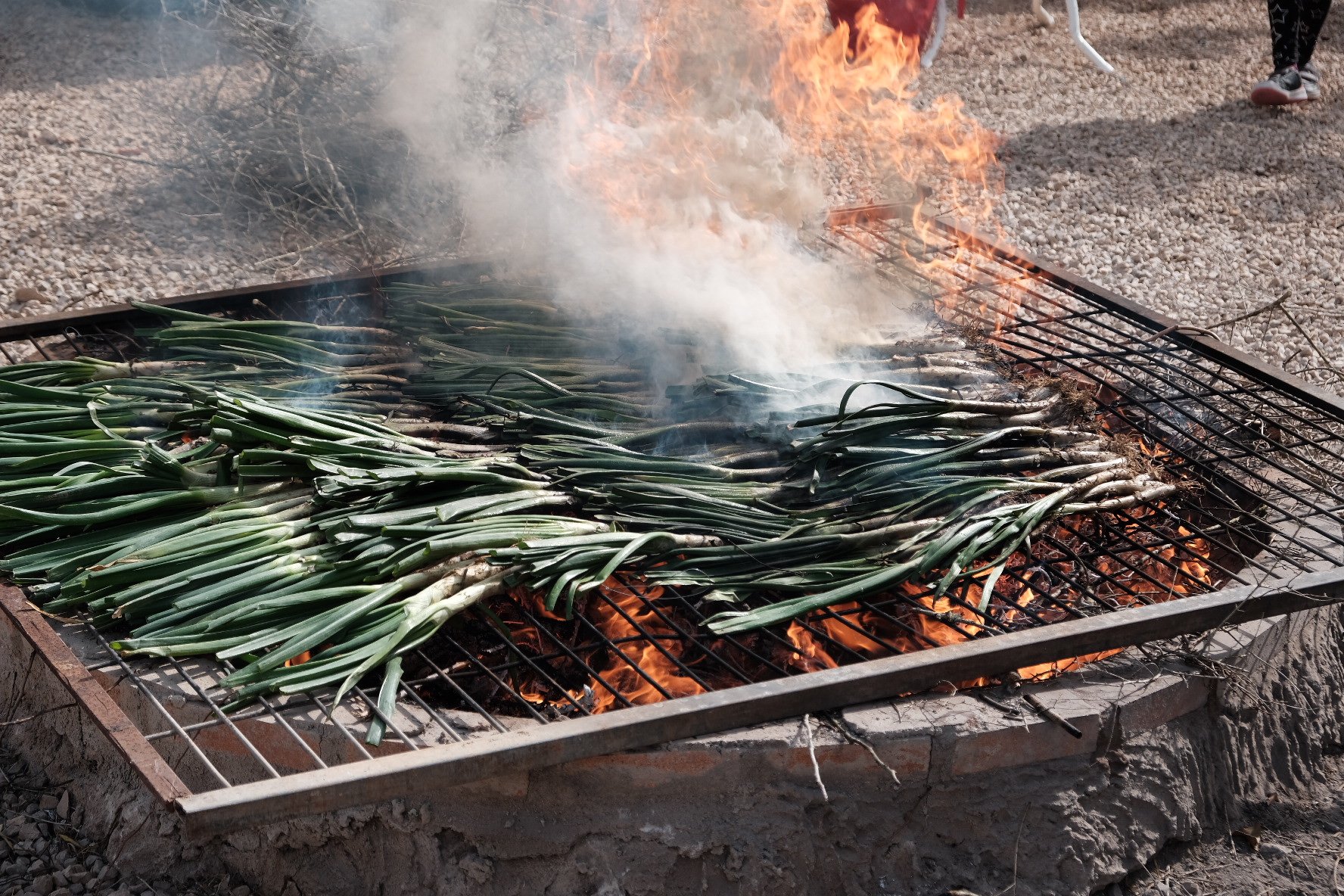
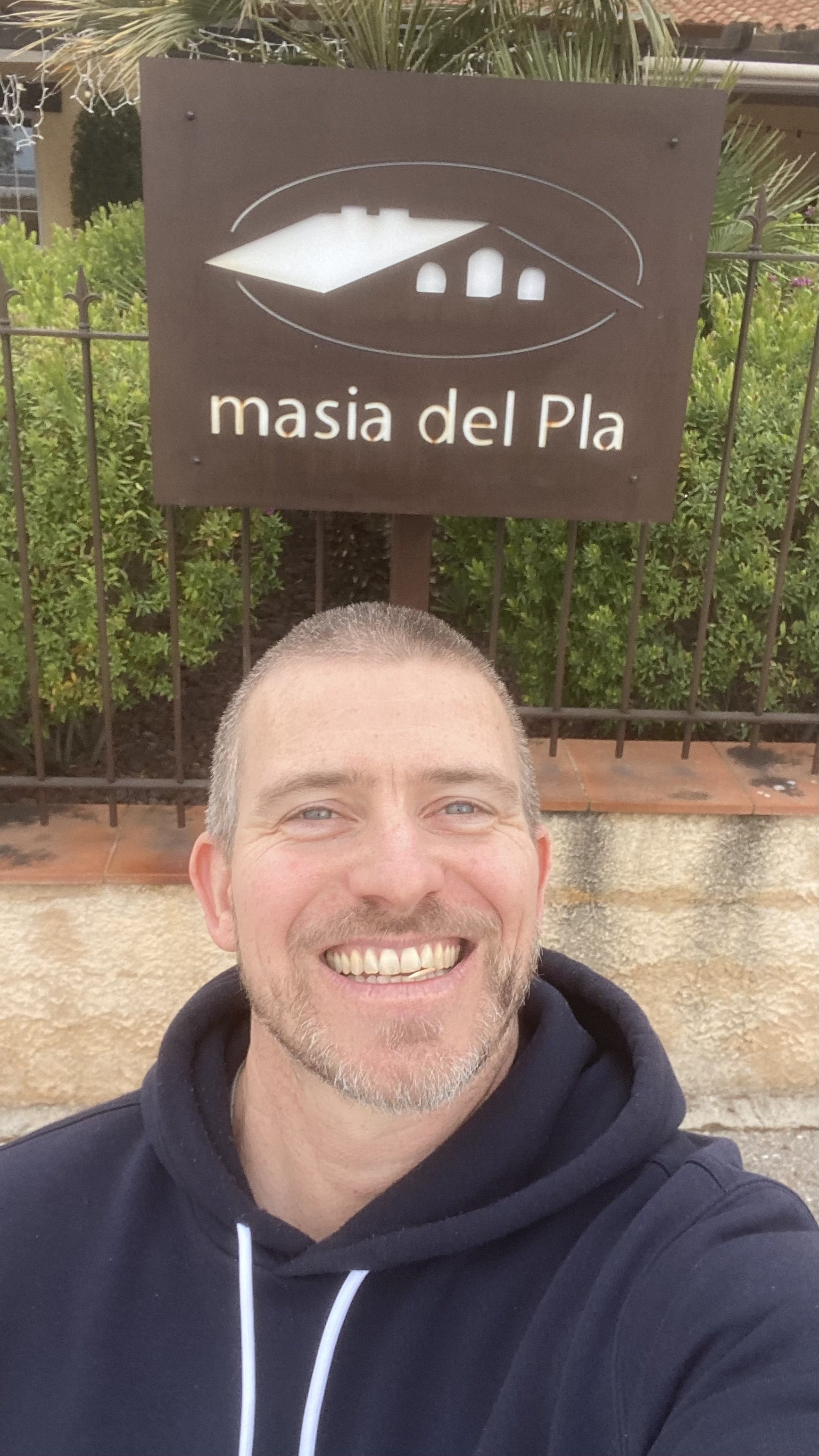
My destination was Masia del Pla, a revered institution celebrated for upholding the truest standards of the Calçotada. The moment you arrive, your senses are flooded. This is not refined, quiet cooking; it is a primal performance of fire. Out back, towering pyramids of calçots—a specific, late-winter green onion—are layered over fierce, blazing vine branches (the sarmientos). These branches burn intensely hot, enveloping the leeks in thick, aromatic smoke. This technique is essential: it isn’t about gently grilling the onion; it’s about charring the outer layers jet-black.
After watching the grill masters at Masia del Pla work the fire, turning hundreds of leeks with long metal tongs, you realize that this rustic barbecue demands immense skill. But the result is magic. I’ll get to that a little later, but first, the meal awaits.
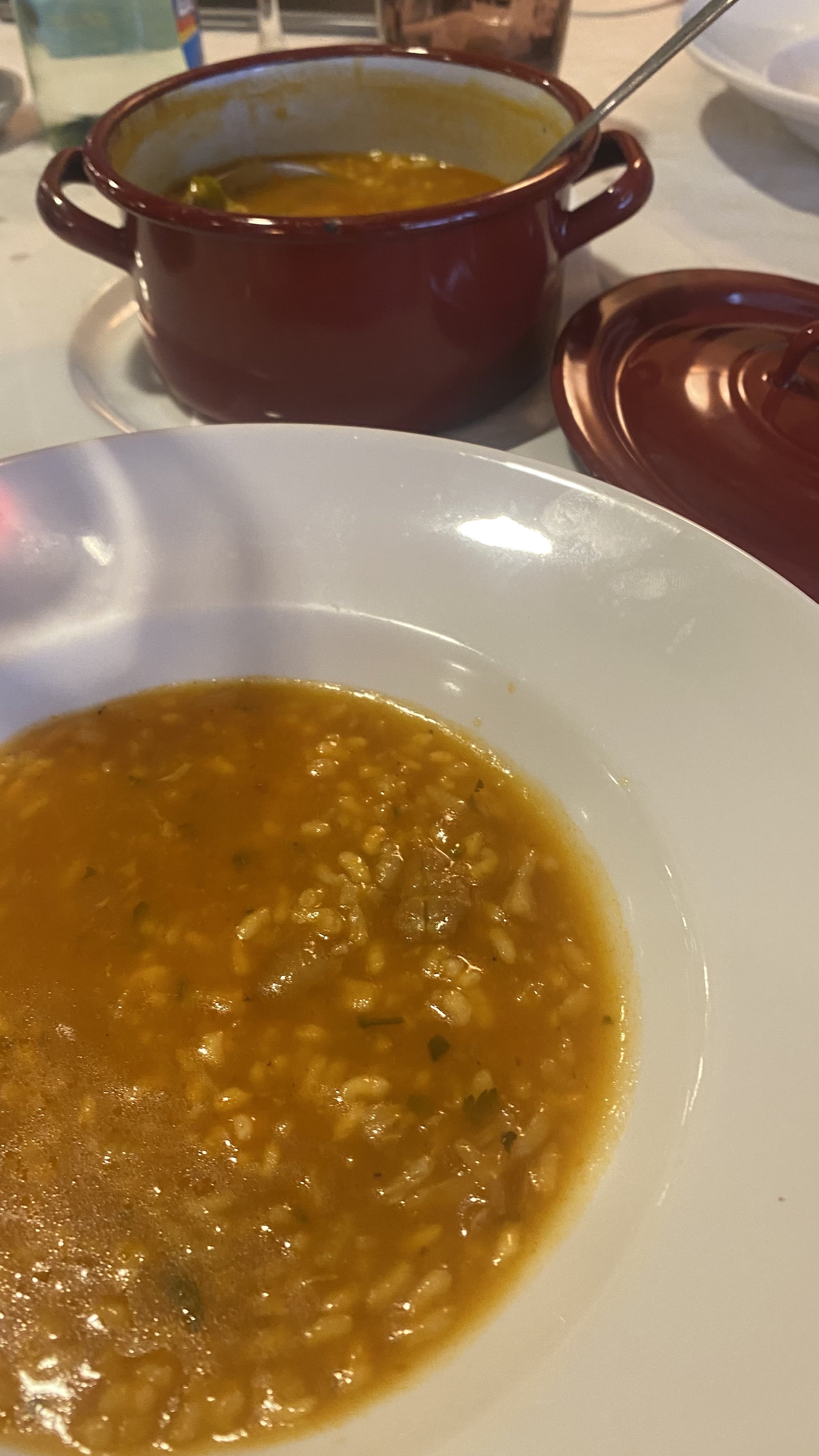
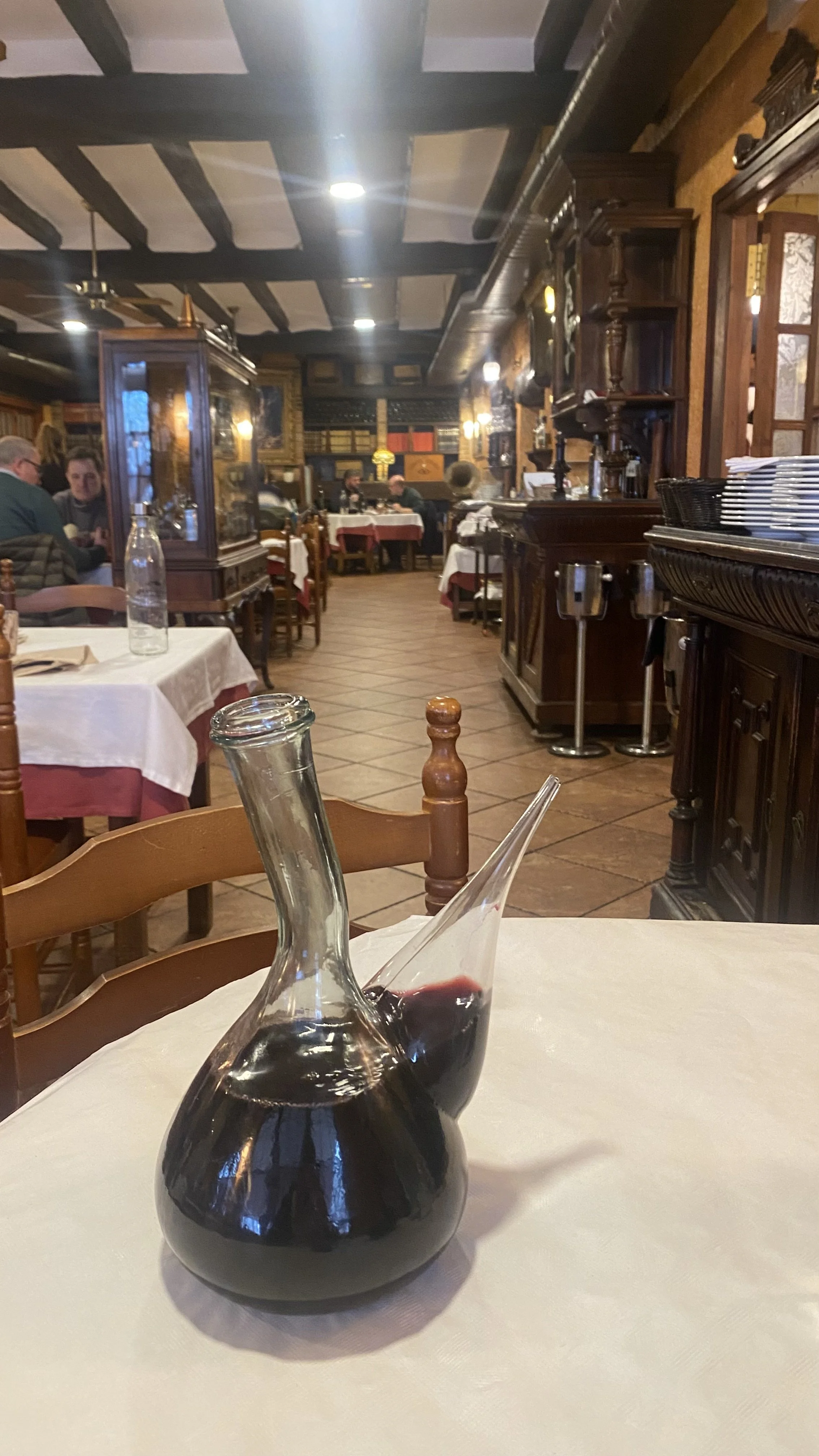
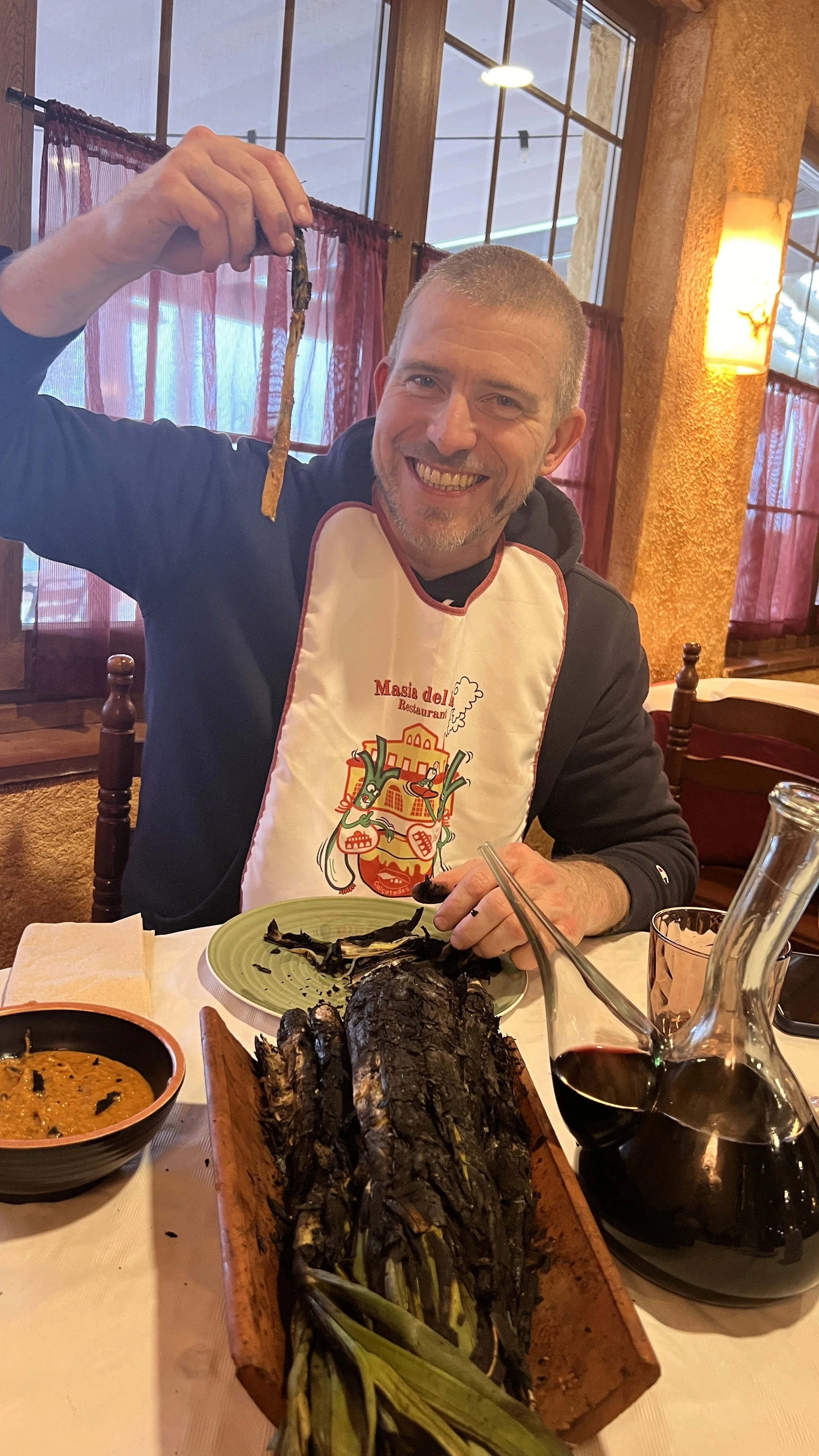
The calçotada is a whole show, with different acts, and usually the opener is very un-leek related. In this case, we were served a beautifully rich stew of local rice and salt cod (bacalao) - it could have been the main meal. It was so delicious and comforting. The briney fish flavors with the cream rice and gentle garlic swirled in your mouth to coax you forward. But then we were given a bib to wear and to protect…the wine arrived, settled in a porrón, a very intimidating glass vessel that you lift, and gravity allows a thin red thread of wine waterfall toward your mouth, and maybe your chin and shirt. But we are here for the experience!
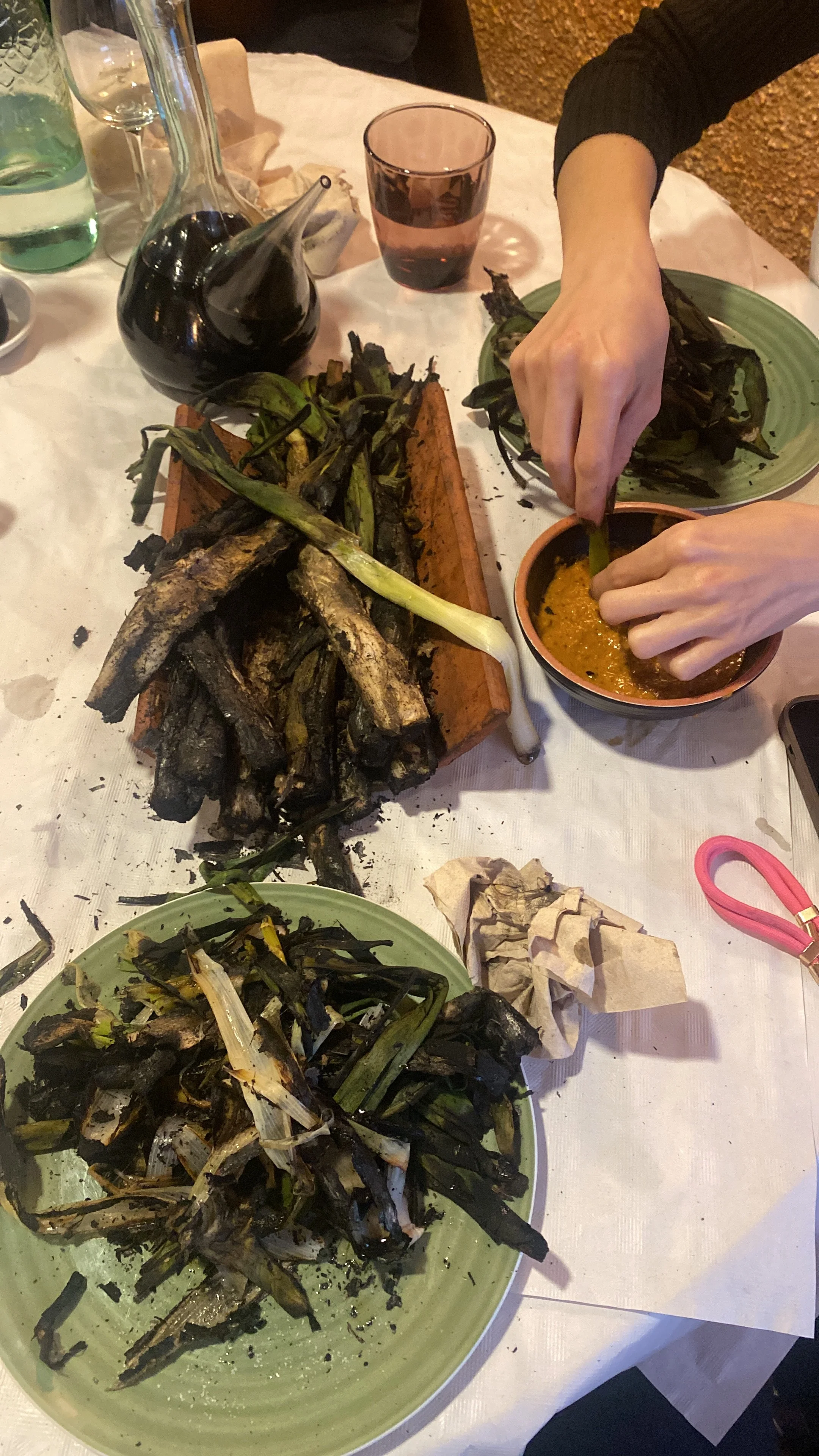
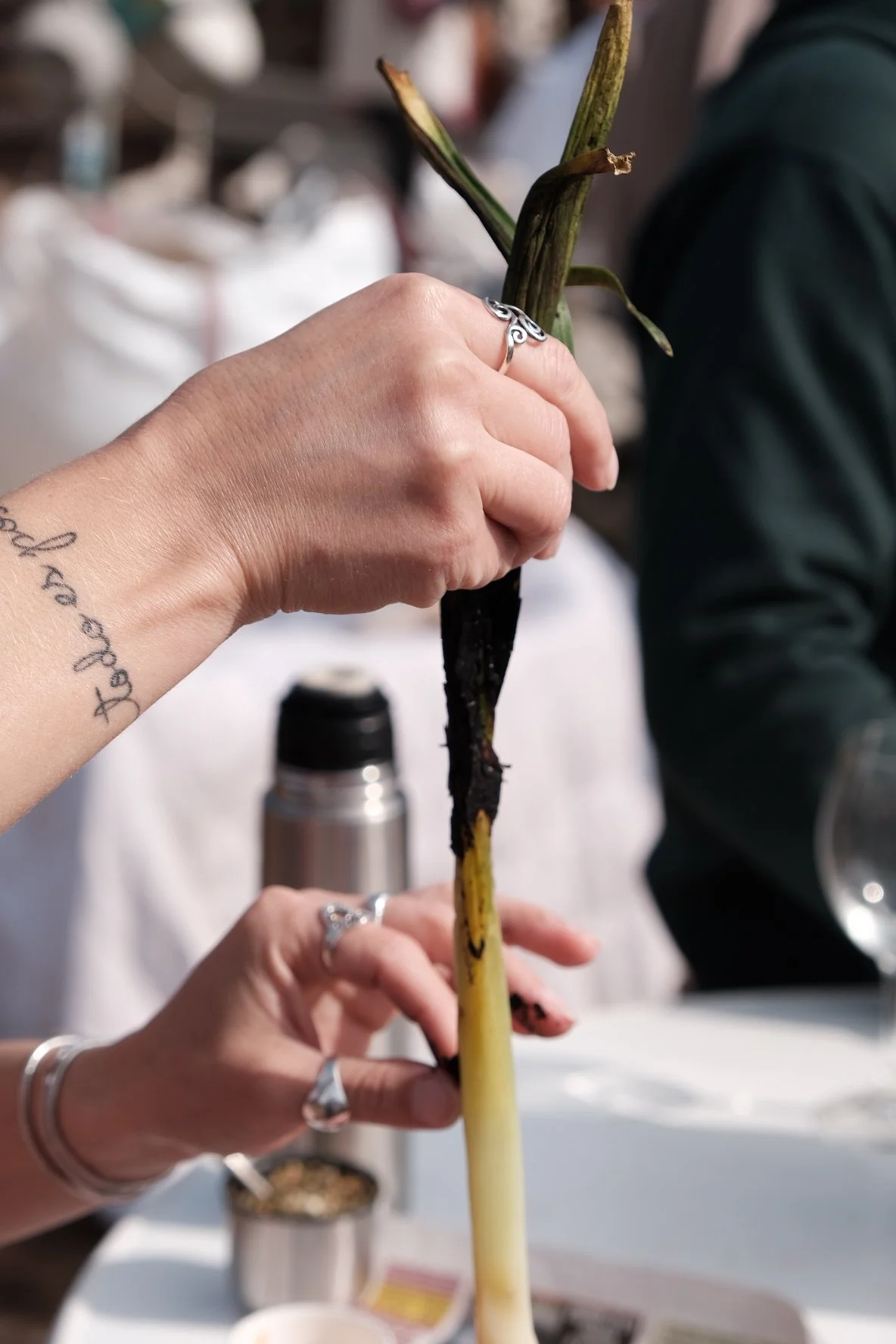
Then the calçots arrive on a terra cotta roof shingle that has been traditional since there were probably roof shingles. The intoxicating smell hit me again and I knew exactly what to do next: you confidently strip away the fire-charred exterior with your grip, and they reveal a steaming, pearlescent-white core—tender, intensely sweet, and softened by the fire’s heat. Then you dip, drape, and enrobe the calçot in an ember-roasted, smoky romesco sauce, a rich emulsion of almonds, hazelnuts, garlic, tomatoes, and ñora peppers. Dipping the hot, sweet onion into the thick, cool sauce and eating it in one profound bite is the very essence of Catalan culinary soul. It was a perfect, foundational experience.
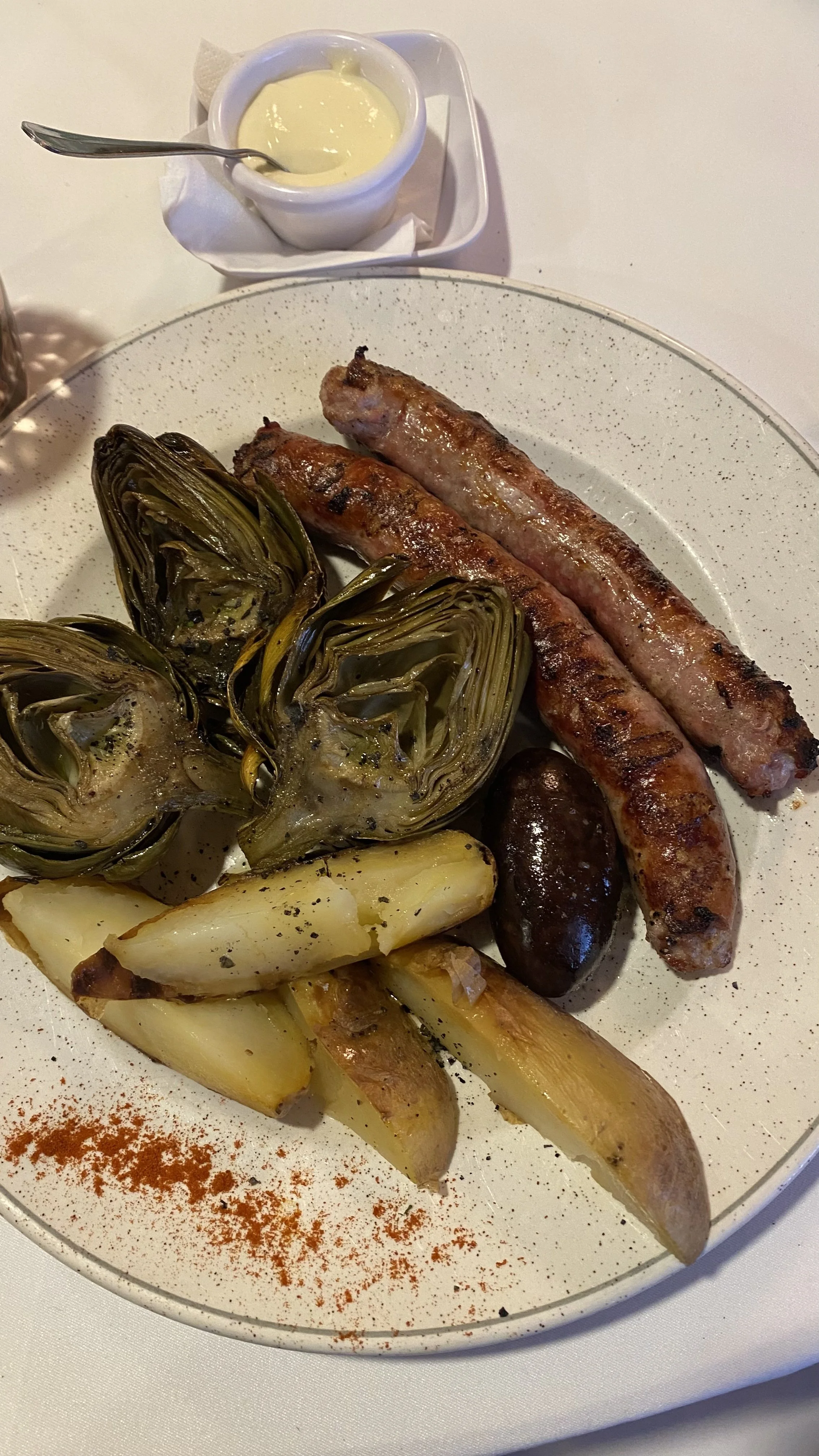
As if the meal wasn't enough, the next course came: Butifarra, Morcilla, Artichokes and Potatoes all grilled to perfection and served with an aioli to die for. This Texan was beyond happy and left dessert for another day!
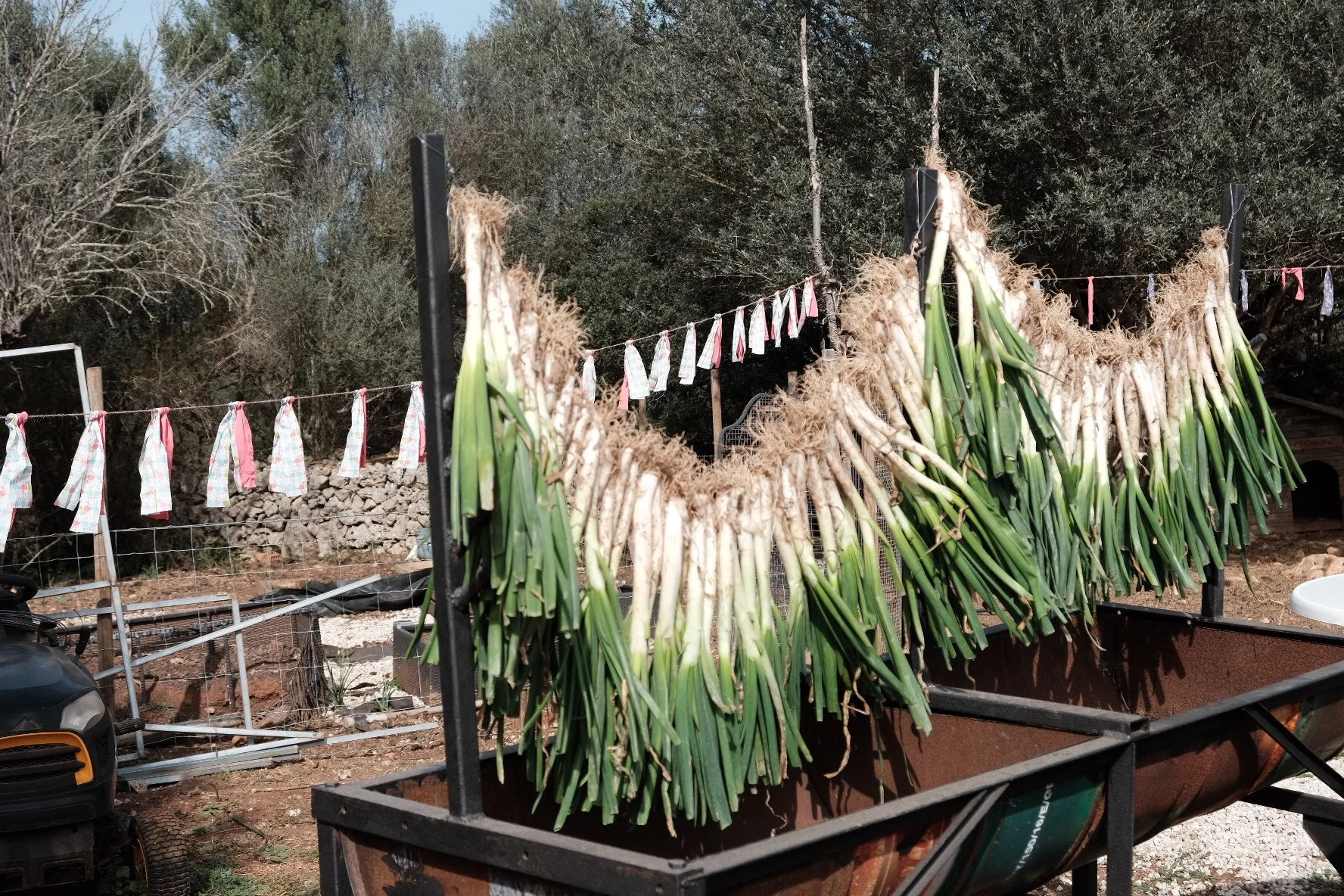
Yet, as vital as the Catalan roots are, the Calçotada has beautifully found its place in the Mallorcan countryside. Over the last years, I have seen its rise in popularity here, embraced as a seasonal celebration that marks the changing of the year. It has become a crucial part of our own culinary fabric, and I am delighted to see colleagues celebrating this magnificent tradition.
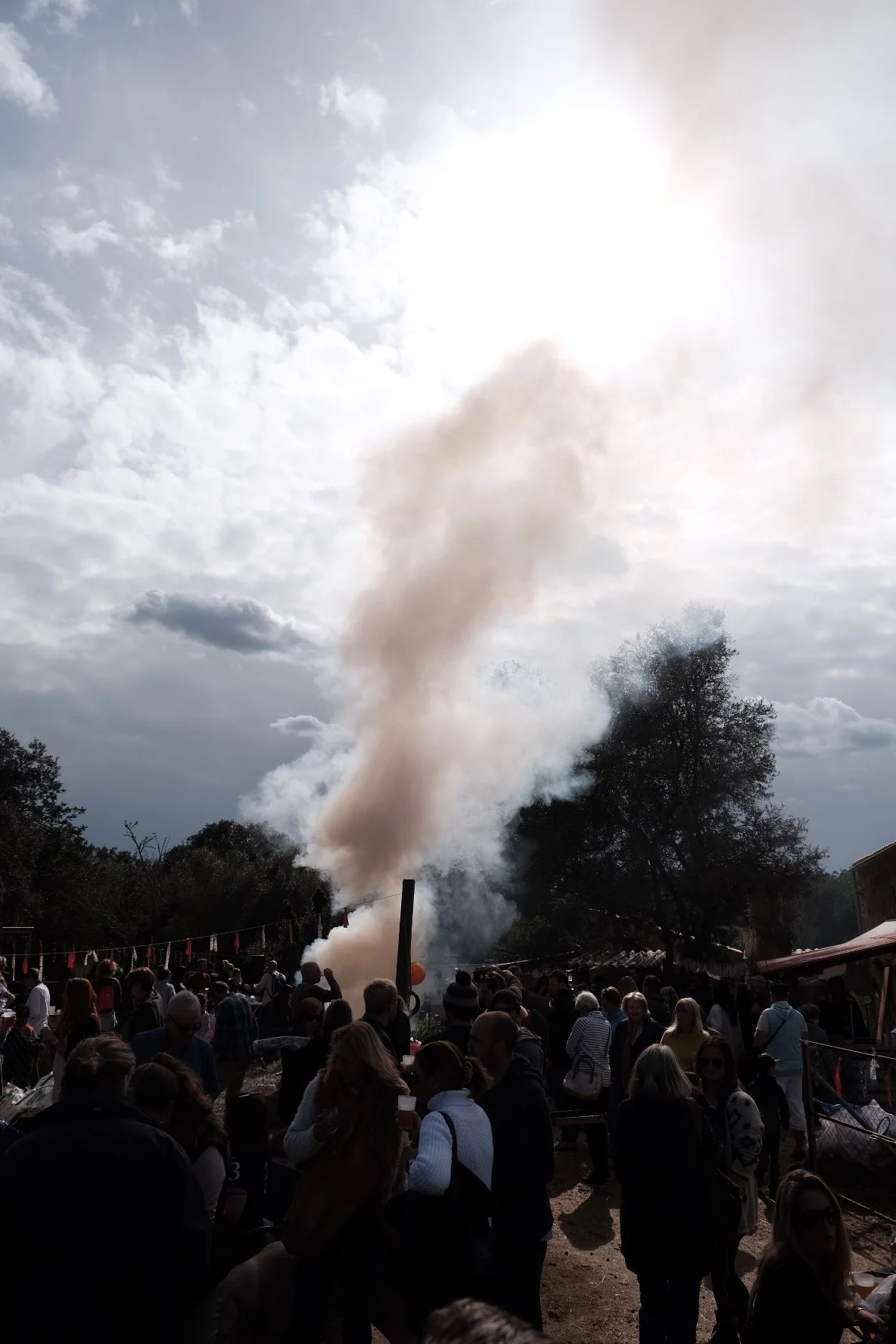
My good chef friend Andy, at Farm to Table Mallorca, has introduced this into his repertoire, often hosting beautiful, traditional Calçotadas as part of his events. His commitment to highlighting our local, seasonal produce aligns perfectly with the ethos of the Calçotada— celebrating the humble vegetable through the power of open fire. He, along with other excellent spots in the Mallorca like the Barrio Gomila in Palma and the wonderful Rancho Fino near Alaró, ensure that the authentic spirit of Valls thrives on our island.
Ultimately, the truth is that you don’t attend a Calçotada for the leeks alone. You go for the ritual of gathering. It is an act of anticipation for the coming of spring, a collective exhale as we embrace a messy, joyous, communal meal. It is exactly how I believe food should be: simple, honest, and the thread that ties everything together.